
Rusted Iron Fence? What It Costs to Wait
Rust does not stop on its own.
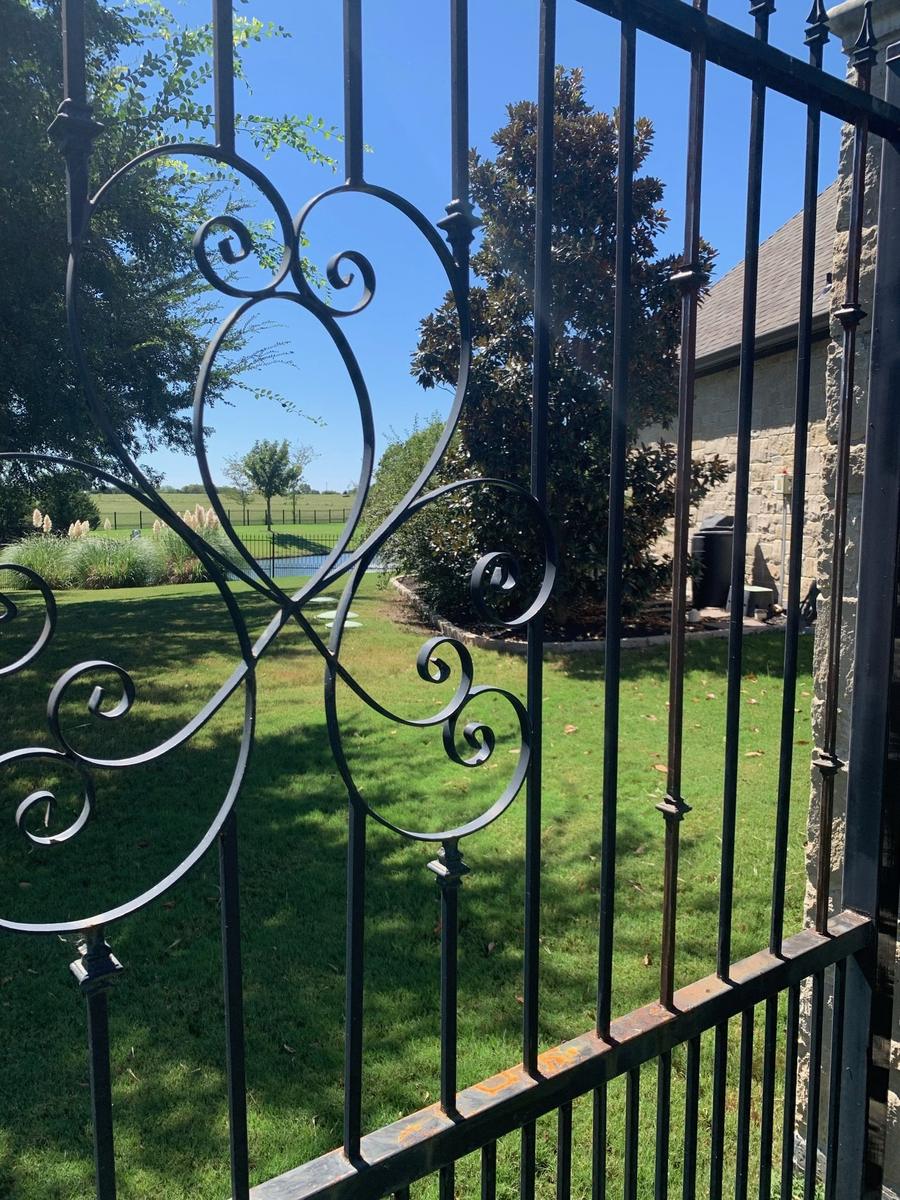
Rust is not a look. It is a process, and it is still running
A rusted fence is not sitting still. Once the paint film breaks, moisture reaches bare metal and oxidation starts. Rust occupies more volume than the steel it replaces, so it lifts the surrounding paint as it grows, exposing more metal, which rusts, which lifts more paint. It accelerates.
That is why the same fence costs very different amounts depending on when you deal with it. Early, it is preparation and paint. Later, it is cutting out metal and welding in new. Later still, it is posts, panels and gates. Nothing about waiting makes it cheaper.
Rust caught in time is a repair, not a rebuild. Here is what our wrought iron fence repair work involves.
Whether you call it wrought iron or rod iron, rust behaves the same way and the fix is the same.
Rust at a post base is what leads to leaning and broken fence posts, and it is cheapest to catch early.
Blackland clay in Rockwall County is hard on iron, which is why rust and leaning posts turn up together here.
Been told to tear it out? Read repair or replacement before anyone pulls posts.
What waiting actually costs
The same fence, at four stages. Each one is more work than the last.
Stage one: the finish goes
Paint is chalking, fading or starting to lift. No metal lost yet. This is the cheapest the job will ever be — prep and a hand-applied finish.
Stage two: surface rust
Orange bloom on pickets and rails, worst at the base and the weld seams. Still repairable by scraping back to sound metal, but the prep takes considerably longer.
Stage three: metal loss
Rust has eaten through. Pickets are thin or holed, bottom rails are soft. Now sections have to be cut out and new metal welded in. The cost steps up.
Stage four: structure
Posts have gone at the base, panels are loose, gates have dropped out of square. This is the point where a replacement quote starts to look reasonable to people — and it did not have to get here.
Gates get worse fastest
A gate carries its weight on two hinges and a post, and it moves every day. Small misalignment becomes dragging, dragging becomes cracked welds, cracked welds become a gate that has to be rebuilt.
Rust travels
It does not stay where it started. Left alone it works along rails and into joints, so a problem in one section becomes a problem in the run.
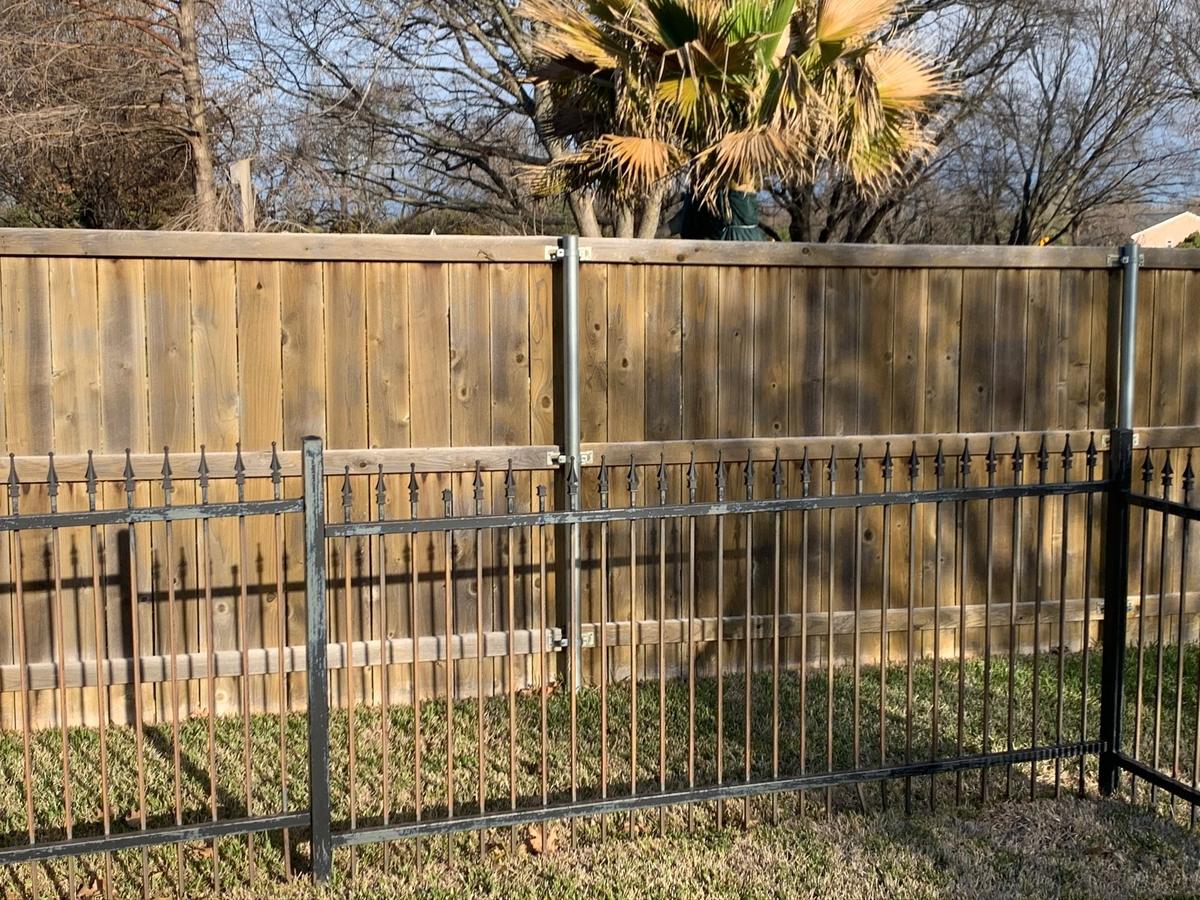
This is stage three, and it was still saved
Metal cut out, new welded in, the whole run taken back and hand-finished. Caught a year earlier it would have been paint alone.
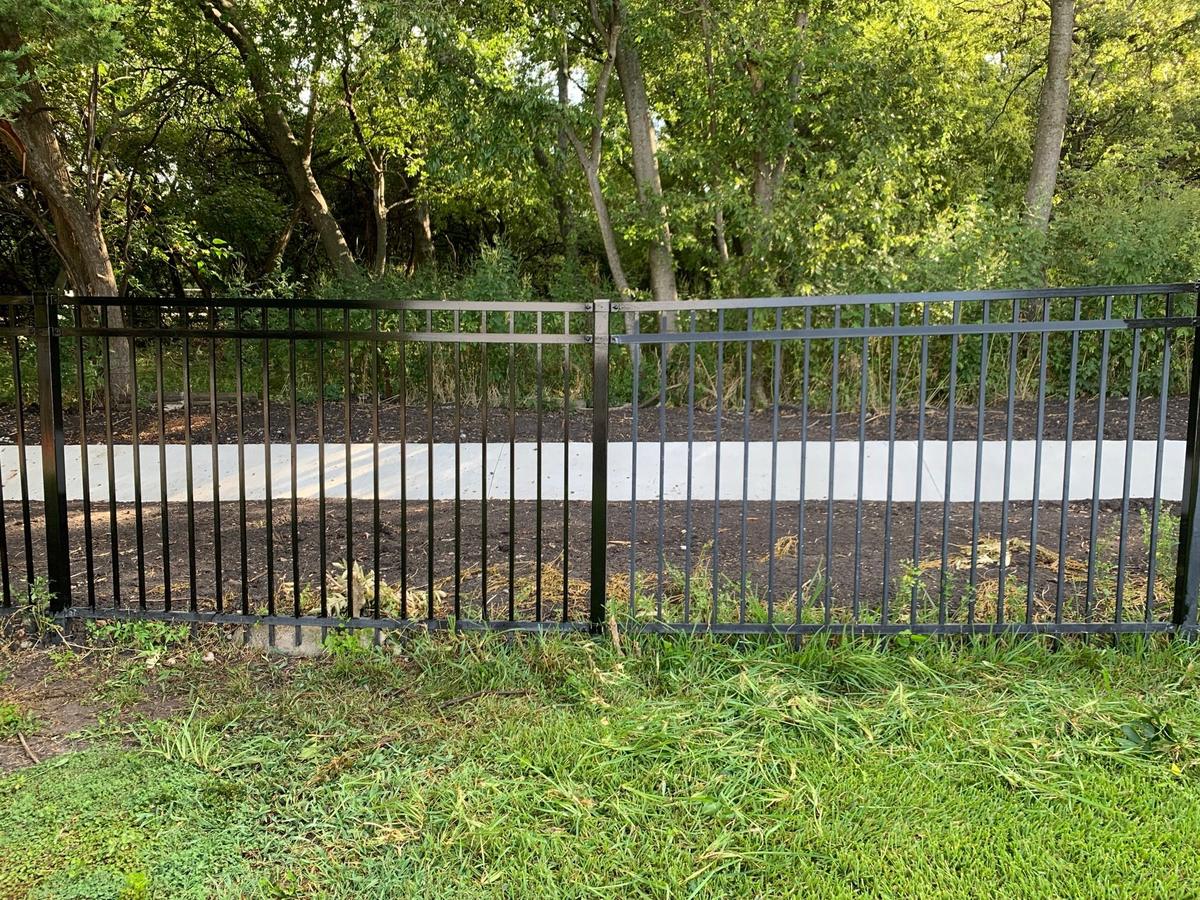
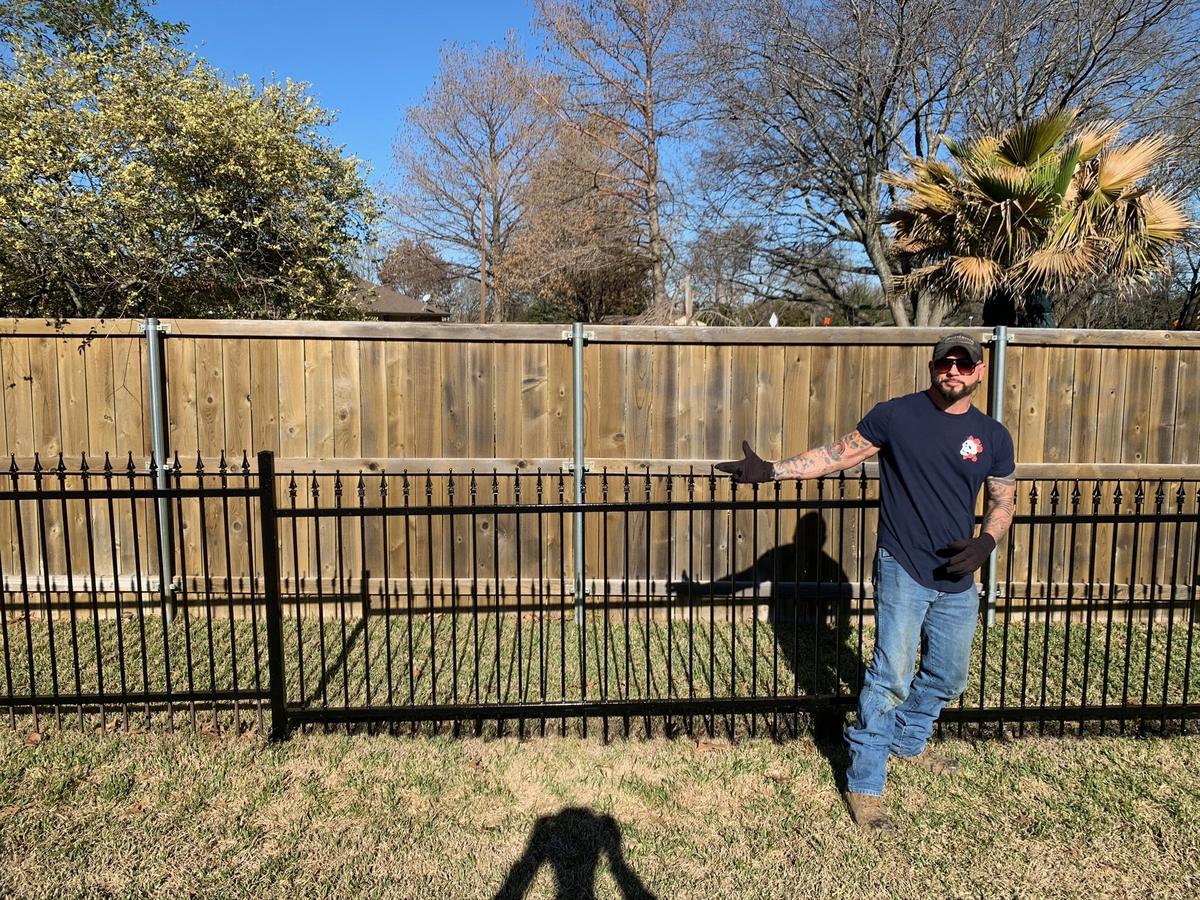
The part that is not about money
A fence and gate do a job. They keep a small child in the yard and a dog off the road. When a gate stops latching properly, that job stops being done — and the failure is quiet. A gate that swings shut but does not catch looks closed. People assume it is closed.
Rusted metal brings its own hazards. Pickets that have corroded through leave sharp, ragged edges at exactly the height a child runs past. Panels that have lost their fixings can move when leaned on. A post that has gone at the base will eventually let a section down, usually in a storm, usually without warning.
- A gate that latches properly keeps children and pets where they should be.
- Rusted-through pickets leave sharp edges at child height. They get cut out and replaced.
- Posts reset before they fail, rather than after a section comes down.
- Every gate is walked and tested with you before the crew leaves.
What we do about it
Honest assessment
We tell you which stage your fence is actually at. If it is early and it only needs prep and paint, we will say so rather than selling you metal work you do not need.
Prep
Every bit of flaking and failing paint comes off back to sound metal. This is what decides whether the repair lasts or lifts again next season.
Metal work
Rusted-through sections are cut out and new metal welded in. Posts that have gone at the base are pulled and reset.
Gates
Every gate works properly when we leave — latching, swinging true and holding. Not almost closing.
Paint and walkthrough
Hand-brushed oil-based Rust-Oleum with a rust inhibitor, then we walk the fence with you before the crew packs up.
Find out what stage you are at
Send a few photos of the worst section and the gate. We will tell you honestly what it needs now, and what it will need if it is left another year.
Rusted iron fences — common questions
Is a rusty iron fence actually dangerous?
It can be. Pickets that have corroded through leave sharp, ragged edges, often at the height a child runs past. Panels that have lost fixings can move when leaned on, and a post that has rotted at the base will eventually let a section down. Most of it is preventable well before that point.
My gate closes but does not always latch. Is that urgent?
It is the fault we would most want to see soonest. A gate that swings shut without catching looks closed, so people stop checking it. That is how a dog gets out and how a small child gets through. It is also usually a quick fix at that stage.
How fast does rust actually spread?
Faster than most people expect, because it is self-feeding. Rust takes up more room than the metal it replaces, so it lifts the paint around it, exposing more bare metal. In North Texas sun and humidity a fence can go from chalking paint to metal loss in a couple of seasons.
Can I just paint over it myself?
Over sound metal with the old finish properly removed, yes. Painted over loose or rusting material it will lift within a season and you will have spent the money twice. The preparation is the job; the paint is the easy part.
How much more does waiting cost?
It depends how far it goes. Prep and paint is the cheapest the job will ever be. Once metal has to be cut out and welded in, that is more work and more material. Once posts and gates have gone, more again.
Is my fence too far gone?
Rarely. Even fences at stage four are usually repairable for far less than replacement. We will tell you honestly if yours is genuinely past saving — but that is not the common answer.
Will you tell me it needs more than it does?
No. If it only needs preparation and a finish, that is what we will quote. Overselling a fence that only needs paint is how you lose a customer for the next twenty years.
What should I send you?
Photos of the worst section, the base of a few pickets, and the gate. If the gate is the problem, a short video of it swinging tells us more than a photo.