
Leaning Posts, Sagging Gates and Broken Fence Posts
A fence that has started to move does not stop on its own. Every week it waits, more of the run goes with it.
Why iron fences lean in North Texas
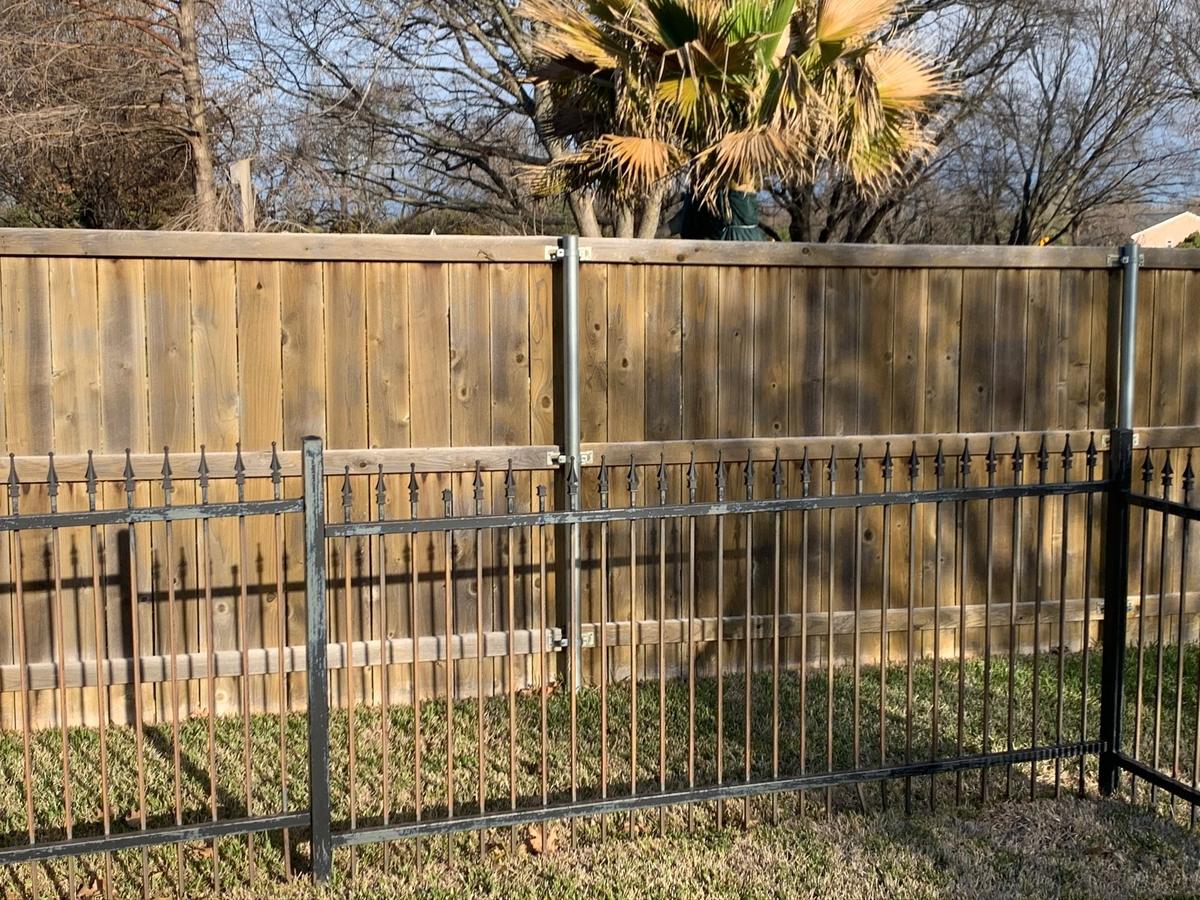
Blackland prairie clay is the reason. It swells when it rains and shrinks when it dries, and it does that several times a year. Every cycle works at the footings. A post that was plumb when it went in slowly gets pushed out of line, and once a post moves, the panels either side of it are carrying weight they were never meant to carry.
Sprinklers make it worse by keeping the ground at the base wet, which both softens the soil and rusts the post where it enters the concrete.
The part people miss is that leaning is progressive. A single leaning post pulls on its neighbours. Given a year, one post becomes three, a gate stops latching because its posts have drifted apart, and the repair goes from a morning’s work to rebuilding a section.
Clay soil is at its worst in Rockwall County and the towns around it, where most of this work lands.
Leaning posts are repairable. Compare the options in repair or replacement.
What we fix when a fence starts to move
All of this is repair work. None of it means you need a new fence.
Leaning posts
Pulled, reset and brought back to line, with the footing corrected so it holds.
Broken posts
Where a post has rusted through at the base, the failed section is cut out and new metal welded in.
Sagging gates
Gates that drag or will not latch are squared up, hinges rebuilt or replaced, and the frame corrected.
Gates that will not catch
Latch alignment is usually a post that has drifted. We fix the cause, not just the latch.
Pulled-apart sections
Panels that have separated at the joints are rewelded and brought back to line.
Rust at the base
The same water that softens the ground rots the post. Failed metal is replaced and the base sealed.
A gate that does not latch is a safety problem
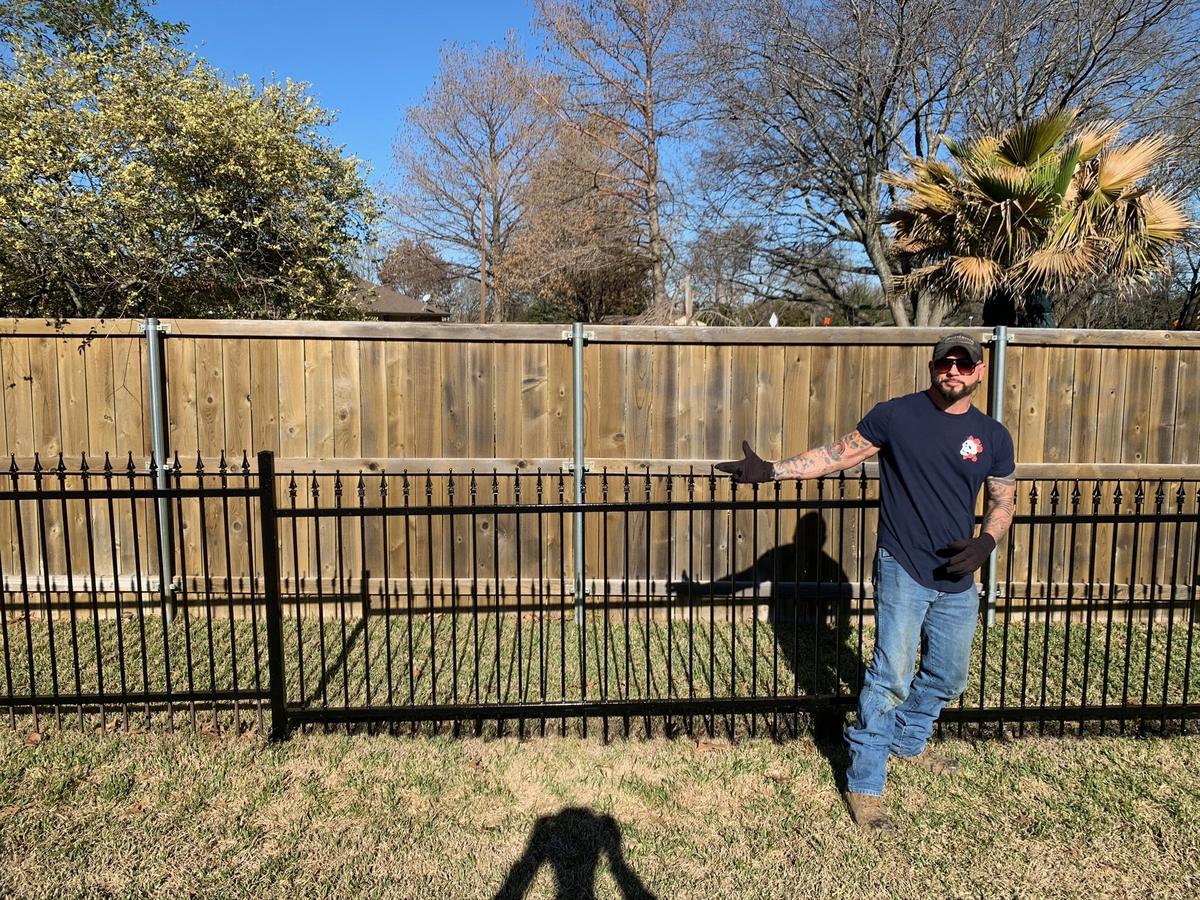
A gate that swings shut but does not catch looks closed. People assume it is closed. A fence is not decoration. A gate that latches keeps a four-year-old in the yard and a dog off the road. If your gate has to be lifted, shoved or wedged to close, that is the fence telling you a post has moved, and it is worth fixing before somebody relies on it.
Why waiting costs more
Movement spreads. That is the whole argument, and it is physical, not a sales line.
- One leaning post is a short job. Three leaning posts is a section rebuild.
- A gate that drags wears its own hinges and frame until both need replacing.
- Rust at a post base keeps eating metal for as long as it is left.
- If it only needs resetting and a finish, that is what we will quote.
How we straighten a fence out
You call
Tell us what is moving. Photos of the leaning post and the gate help.
We come out
We check the whole run to find every post that has shifted, not just the obvious one.
Straight quote
Clear pricing, free estimate, no pressure.
The work
Posts pulled and reset, failed metal cut out and rewelded, gates squared and rehung.
Walkthrough
We work every gate with you before we leave and make sure each one latches.
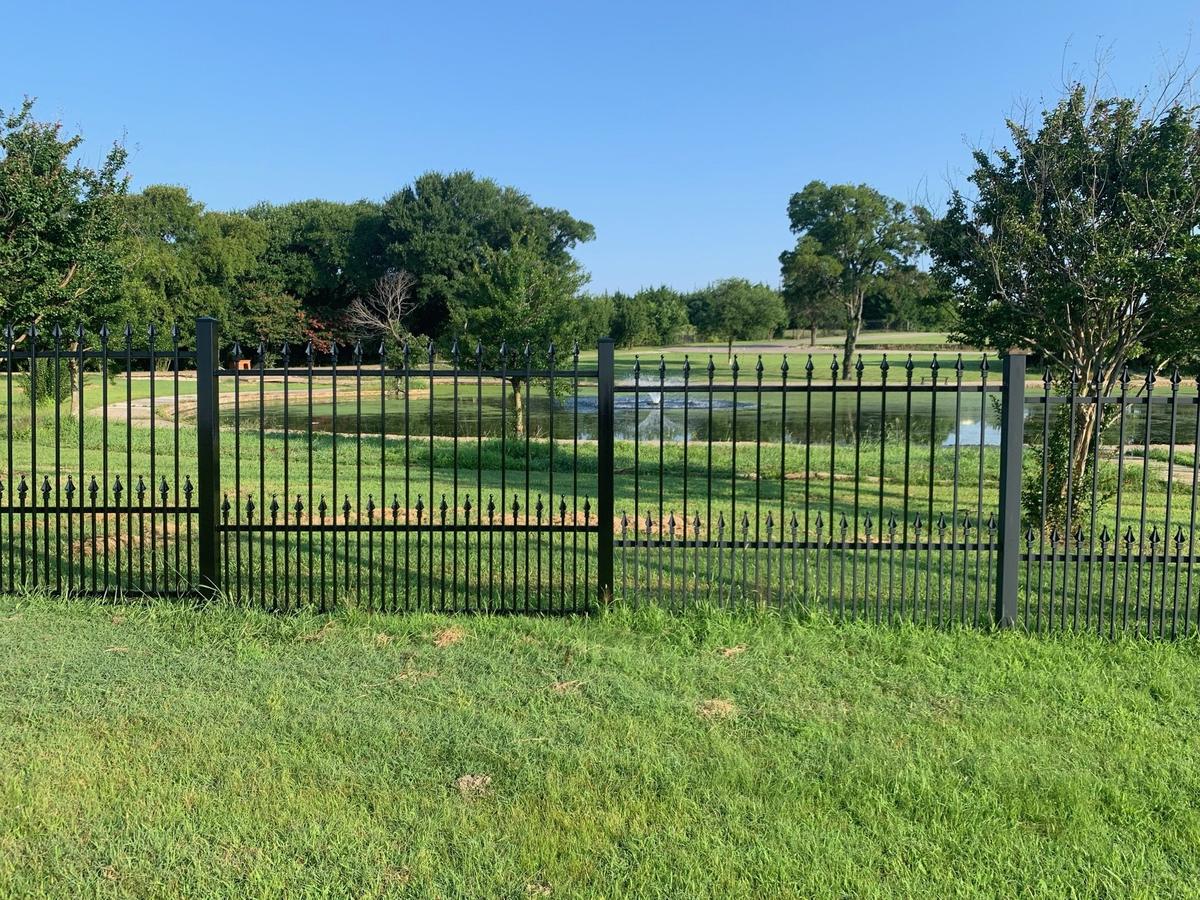
Catch it while it is one post
If a post has started to lean or a gate has stopped latching, that is the moment it is cheapest to fix. We work across the Dallas–Fort Worth metroplex, and the estimate is free.
Common questions about leaning posts and sagging gates
Why is my iron fence leaning?
Almost always the soil. Blackland prairie clay swells and shrinks through the year and works at the footings until a post goes out of plumb. Sprinklers speed it up by keeping the base wet, which softens the ground and rusts the post where it enters the concrete.
Can a leaning fence post be fixed, or does the fence need replacing?
It can be fixed. The post is pulled, reset and brought back to line, and the footing is corrected so it holds. Replacing a whole fence because of a few posts is almost never necessary.
My gate drags on the ground. What causes that?
Usually a post that has drifted, worn hinges, or a gate frame that has racked out of square. All three are repairs. Dragging also wears the hinges further, so it gets worse the longer it goes.
My gate will not latch any more. Is that the latch?
Rarely. When a gate stops catching it is normally because the posts either side have moved apart or out of plumb. Adjusting the latch hides it for a while. Correcting the posts fixes it.
What if a post has rusted through at the bottom?
That section is cut out and new metal welded in, then the base is finished so water stays out. The rest of the post stays where it is.
How long does this kind of repair take?
Most jobs take one to three days depending on how many posts have moved. A single post and gate adjustment is often a morning.
Is it cheaper to fix it now or wait?
Now, and by a wide margin. One leaning post is a short job. Left alone it pulls on its neighbours until a section needs rebuilding, and a dragging gate wears out its own hinges in the meantime.
Do you guarantee the work?
Welds are guaranteed, and every completed job includes one free touch-up within the first year.
Do you also repaint after the repair?
Yes. Repaired areas are scraped back and painted by hand with oil-based Rust-Oleum and a rust inhibitor. On a fence we restore, we carry the finish across the whole run so repairs do not show.
What areas do you cover?
The whole Dallas–Fort Worth metroplex, including Rockwall, Heath, Rowlett, Dallas, Lucas, Frisco, McKinney, Plano, Allen, Wylie and Fort Worth.
Is rod iron fence repair the same as wrought iron fence repair?
Yes. Rod iron and rot iron are how most people say wrought iron, and we answer to all three. Whatever it is called, the fence rusts in the same places and is repaired the same way.