
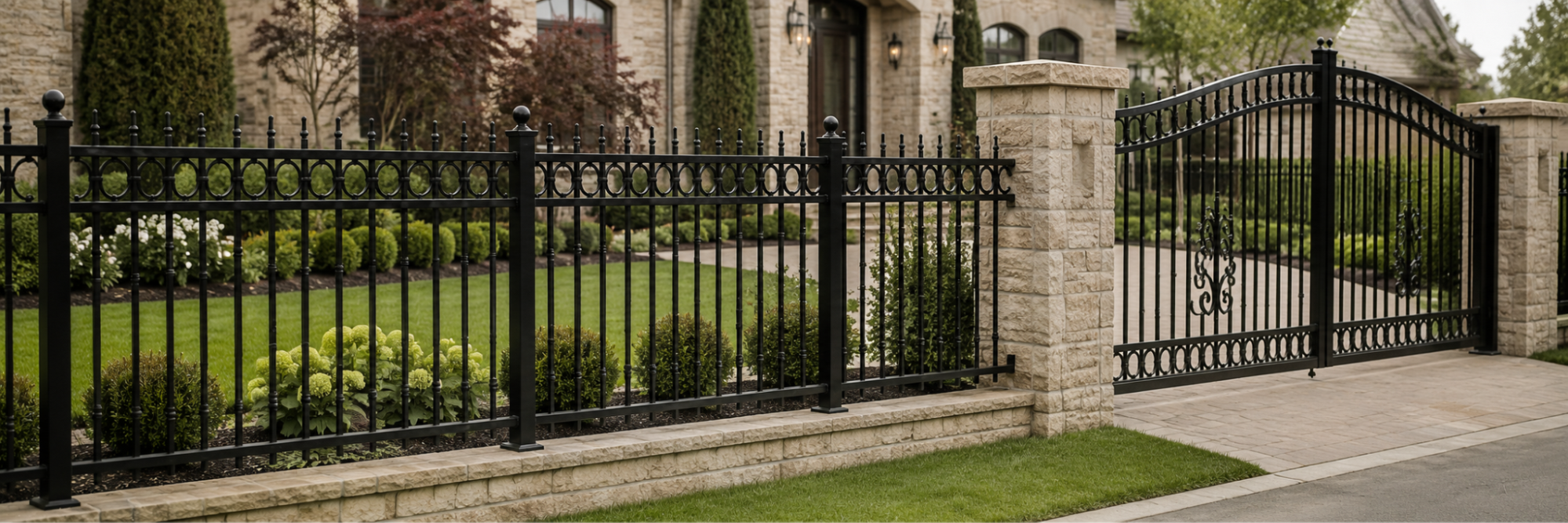
A wrought iron fence can instantly elevate a property while adding strength, security, and a timeless look that works for both classic and modern homes. It is durable, highly customizable, and built to make a strong first impression, especially in a front yard, around a garden, or along key property lines.
However, like any major property upgrade, it comes with a price. If you are wondering how much is a wrought iron fence, the final quote depends on several details, from fence design to finishing choices.
Key takeaways
- A wrought iron fence usually costs more when the fence is taller, longer, or more decorative.
- Most wrought iron fence projects are priced by the linear foot.
- The cost of different wrought iron fences vary based on their type: ornamental, privacy-enhancing, or security-focused fences.
- Labor, site preparation, permits, finishing, and removal work can all increase the final quote.
- The best way to know your exact wrought iron fence cost is to get a custom estimate for your property.
What factors affect wrought iron fence installation costs?
There are several factors that affect wrought iron fence costs and what you can expect to pay.
Height and total length
The size of the fence is one of the biggest pricing factors. Contractors typically calculate pricing by the linear foot, meaning the total length of fencing required.
Height also affects pricing. A taller fence requires heavier components, stronger fence posts, and additional structural support. A decorative 4-foot fence around a front yard will generally cost much less than a 7-foot perimeter fence designed for security.
Fence type
Not all iron fences are built the same. The specific fence type you select can significantly influence both material costs and installation expenses. Simpler designs usually cost less because they use fewer decorative parts and require less fabrication time, while more detailed or security-focused fences often need heavier materials, closer spacing, or more skilled labor.
Common options include:
- Plain wrought iron fencing: This is usually one of the more affordable iron fence options. Property owners can often expect to pay around $35 to $60 per linear foot installed, depending on height, materials, and site conditions.
- Ornamental fences: Ornamental iron costs more because it may include scrolls, rings, finials, arched rails, or other decorative details. These fences often range from $60 to $120 per linear foot installed, with higher prices for more detailed designs.
- Pre-galvanized fencing: Galvanized iron or steel usually costs more upfront than basic unfinished metal because it has a protective coating that helps resist rust and corrosion. Many projects cost around $50 to $100 per linear foot installed, depending on the style and finish.
- Security-focused fencing: Security iron fencing often uses taller panels, heavier posts, stronger rails, tighter picket spacing, and reinforced gates. These systems commonly start around $100 per linear foot installed and can exceed $200 per linear foot for high-security or custom applications.
Build and customization
The more bespoke your fence is, the more you can expect to pay. A pre-fabricated fence panel is usually the most affordable option because the pieces are already made in standard sizes and patterns. That makes the project faster for the fence installer and can support easy installation on straightforward properties.
Custom fabricated fencing costs more because the fence is built around your property, measurements, and design goals. Details like decorative finials, scrollwork, curved rails, custom picket spacing, and matching gates all add production time. A custom wrought iron gate can also raise the total cost, especially if it needs special hinges, automation, decorative framing, or stronger posts.
Hand-forged or real wrought iron work sits at the higher end of the market. It requires more craftsmanship than standard mild steel or manufactured ornamental iron systems. While it costs more upfront, it can be a strong choice for historic homes, luxury properties, and owners who want a truly distinctive timeless look.
Labor cost and project timescale
Labor costs depend on how much time, skill, and equipment the job requires. In Texas, many fence installation labor rates can fall around $30 to $80 per hour per worker, while full wrought iron installation labor may be priced into the per-foot quote. For a standard residential project, labor alone may add roughly $15 to $45 per linear foot, depending on the fence height, layout, and complexity.
The more detailed the project, the longer the work usually takes. Larger fence runs, taller panels, decorative layouts, custom gates, and precise alignment all require more time on site. As the timeline expands, labor costs increase because the crew needs more hours to measure, position, secure, and finish each section properly.
Also, keep in mind that the cheapest bid does not always translate to best value. A skilled fence installer or experienced fence contractor may charge more than less-qualified competitors, but quality workmanship can help avoid costly repairs later.
Installation method
The way a wrought iron fence is installed can also affect the final price. Different installation methods require different materials, equipment, and labor. The most common methods include:
- Ground-mounted installation: Fence posts are set directly into concrete footings in the ground. This is the most common and often the most cost-effective option.
- Wall-mounted installation: Fence panels are attached to an existing retaining wall, concrete wall, or masonry structure. Additional brackets and specialized fixings may increase costs.
- Between-column installation: Fence panels are installed between existing brick columns or masonry pillars. Precise measurements and custom fabrication are often required for a proper fit.
- Core-drilled installation: Posts are secured by drilling directly into concrete surfaces such as driveways, patios, or walls. This method typically requires specialized equipment and additional labor.
Site conditions
Site conditions can affect the quote because some properties take more time and preparation than others. Uneven terrain, rocky soil, drainage issues, tight access points, nearby structures, or dense landscaping can make installation more difficult for the crew.
The more challenging the site is, the more labor, equipment, and planning the project may require. A simple, accessible fence line usually costs less to install, while a more complicated property can increase the total cost.
Location
Your location can influence both labor and material pricing. Local labor rates, material availability, transportation costs, and market demand all play a role in the final quote.
For example, a wrought iron fence installation in a major metro area may cost more than a similar project in a smaller community. Regional pricing differences can affect the overall project cost even when the fence design and size are the same.
Permits and surveys
Some fencing projects require permits or property surveys before installation can begin. Specific requirements, such as fence height, location, or proximity to public spaces, vary by municipality.
Permit fees and survey costs can add to the overall budget, but they help verify compliance with local regulations and confirm property lines before construction starts.
Painting and finishing
Painting and finishing protect the fence from moisture, weather exposure, and everyday wear. Common options include powder coating, factory-applied finishes, and specialty coatings designed to help prevent rust and corrosion.
Higher-quality finishes typically cost more upfront but usually have the durability and premium look that requires less maintenance over time. Many property owners view this added protection as a worthwhile investment in the fence’s appearance and longevity.
Removals and site clearing
Before installation can begin, the fence line needs to be clear, accessible, and ready for the new posts and panels. Site clearing may involve removing an old fence, pulling out existing posts, cutting back bushes, clearing debris, or trimming vegetation that could interfere with the installation.
The more clearing required, the more it can add to the final cost. Old fence posts can be especially difficult if they are set deep in concrete. Crews may need specialized equipment or extra heavy lifting to remove them without damaging nearby landscaping, driveways, or walkways. Dense shrubs, tree roots, and uneven ground can also slow down the work.
How much can I expect to pay?
One of the biggest questions property owners ask is the average iron fence cost. While every project is unique, most homeowners can expect the following general pricing ranges:
| Fence type | Average cost per linear foot installed |
| Basic ornamental steel fence | $35–$60 per linear foot |
| Mid-range decorative fence | $60–$100 per linear foot |
| Premium custom iron fence | $100–$200+ per linear foot |
| Custom hand-forged fencing | $200–$400+ per linear foot |
To put those numbers into perspective:
- 100 feet of basic fencing: approximately $3,500–$6,000
- 100 feet of decorative fencing: approximately $6,000–$10,000
- 100 feet of premium custom fencing: approximately $10,000–$20,000+
That installed price usually includes both materials and labor. In general, labor may account for about $15 to $45 per linear foot, though custom work, difficult access, removals, gates, and specialty installation methods can push overall pricing even higher.
Although the upfront investment may be higher than vinyl, wood, or chain link alternatives, many property owners appreciate the durability, timeless look, and aesthetic appeal that iron fencing provides. Top quality iron fencing can also deliver strong long-term value, particularly for luxury homes and high-end properties.
Get a clear wrought iron cost estimate for your property
No two fencing projects are exactly alike, with many factors such as fence length, design, site conditions, access, and customizations all influencing the final cost. While general estimates can provide a starting point, the best way to determine a fair price is through a professional assessment.
Before you price a new fence, check whether the one you have can be saved. Wrought Iron Rescue specializes in wrought iron fence repair and restoration across Dallas–Fort Worth: rusted sections cut out and new metal welded in, posts reset, and the fence painted by hand, usually for a fraction of the cost of replacement. If you do need something new, we build custom gates and fencing too. Contact our team for a free estimate.
